
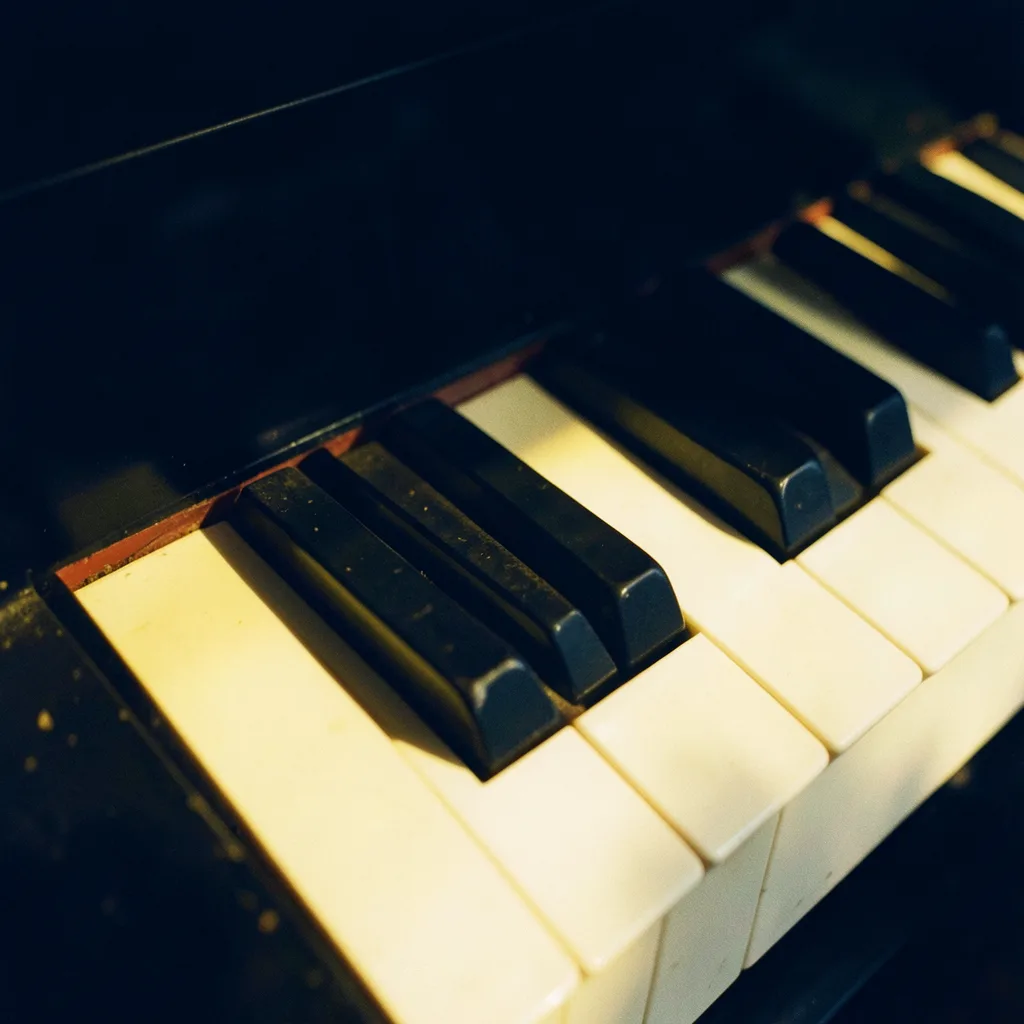




How to Handle Fast Letter Note Sequences Without Getting Lost
Playing a stream of notes that scrolls past faster than your eyes can track is a common wall for anyone learning piano through letter notation. The notes are simple letters — A, B, C, D, E, F, G — and yet when a dozen of them flash by in the space of a second, the page suddenly reads like noise.
Letter notation removes the hurdle of reading traditional sheet music, but it cannot remove the speed at which your eyes, brain, and fingers need to coordinate. A fast sequence asks you to recognise, decide, and press in well under a second, repeatedly, without missing a beat.
Many Australians start their musical journey later in life, after work hours in a flat in Brisbane or a townhouse in Perth. The good news is that the techniques used by concert pianists to tame tricky passages are the same ones casual learners can use at home, and they do not require years of formal study.
This guide walks through seven practical strategies that turn overwhelming runs of letters into something your hands can navigate with confidence. Each section can be tried in five or ten minutes with any song you are learning.
Start slower than feels natural
The single biggest mistake beginners make when facing a fast letter sequence is trying to play it at performance tempo on day one. Slow practice is not a sign of weakness; it is the foundation of clean technique. Drop the speed until every note is even, every finger lands precisely, and every transition is silent.
A practical target is around half the song's intended speed. If a piece normally plays at 120 beats per minute, start at 60 and stay there until the sequence feels automatic. Only then increase the metronome by a few notches at a time.
Many players in Melbourne and Sydney use a kitchen timer or a phone metronome app set to a steady pulse, then count aloud. Speaking the letters — C, D, E, F — as you press them locks the rhythm into your body in a way silent playing cannot.
Break the run into two-bar cells
Long sequences feel monstrous because we try to swallow them whole. The solution is to chop them into tiny, digestible chunks, then practise each chunk until it is boringly easy. Two bars, or even one bar, is often the right size.
Once a small cell is comfortable, attach the next cell to the end of it. Practise the join dozens of times before attempting three cells together. This stepwise approach is how the Suzuki method teaches children in Australian music schools, and it works just as well for adult learners working through pop ballads.
If you are learning a particular track, you can find its letter version and isolate the fastest part with a highlighter. Spend an entire session on that two-bar slice, then bring it back the next day. Your memory will surprise you.
Tap the rhythm before you sing the pitch
A common trap is reading each letter as an isolated event. The page reads L, E, T, T, E, R, S — six separate decisions. The brain tires quickly under that load. What works better is hearing the rhythm first and fitting the letters into a pulse you already feel.
Try clapping or tapping the rhythm of the sequence on a table or your thigh before you touch the keyboard. Once the rhythm feels solid, add the pitches letter by letter. This separates the timing problem from the accuracy problem, and each becomes much easier to solve alone.
For tracks with a strong groove — think the upbeat sections of an Abba tune, which many Australian households grew up with — the rhythm alone will carry most of the musical interest. The letters just need to land in the right pocket.
Anchor your gaze on the middle of the keyboard
When a run is fast, your eyes often dart back and forth between the page and your hands, hunting for the next letter. This visual ping-pong slows you down and creates mistakes. A more efficient approach is to glance at the letters, memorise the next small group, then look at your hands while playing it.
Many teachers call this the look, play, look cycle. In a small room in Adelaide or Hobart, where the keyboard might be pushed against a wall, the eye line can be set up so that the music stand is just above the keys. This minimises the distance your gaze travels and lets you hold a short sequence in working memory.
The more you trust your hands, the less you need to watch them. With time, fast sequences feel less like reading and more like typing — fingers know where to go.
Lean on a metronome that fits your routine
A reliable metronome is the single most useful tool for taming fast letter passages. Without one, speed creeps up unevenly and weak notes hide inside fast sections. With one, every increment is measurable and every gain is earned.
Several free apps include Australian tempo markings or local sound themes, and they integrate with Bluetooth speakers common in Aussie homes. For a structured look at how gamified practice apps layer motivation onto repetition, the blackjack minimale inzet review on this site walks through one option in detail.
Use the metronome for every slow-practice session. When a sequence finally feels easy at 80 beats per minute, lift the tempo by four or five points. Resist the temptation to jump twenty points at once — small, consistent gains always beat sudden leaps.
Spread practice across the week, not into one marathon
Cramming three hours of practice into a Sunday afternoon feels productive, but the brain stores motor skills during rest, not during repetition. Five 20-minute sessions scattered through the week will do far more for a fast sequence than one long slog.
This rhythm fits well with Australian work life, where coffee breaks, commutes on the train between Parramatta and the city, or quiet evenings after dinner all offer windows for short focused practice. Even ten minutes with a tricky passage, repeated five days running, will outpace a single two-hour marathon.
Spacing also helps you spot which notes actually stick and which ones you relearn each time. The ones that keep slipping are the ones that deserve more attention in the next session.
Pair every fast passage with a slower reference recording
Listening is practising. Before you play a fast sequence, listen to it performed slowly, then at tempo. This gives your ear a map of where the run is heading, so your eyes do not have to decode every letter from scratch.
Plenty of artists release slowed-down tutorial versions of their tracks on streaming services available in Australia. Some piano-focused creators even publish letter-by-letter walkthroughs that pair audio with on-screen notation. If you are building your library of letter-based arrangements, the sheet music in letters catalogue is a solid place to browse songs organised by difficulty.
When you have heard the passage in both slow and fast forms, the fast version stops being a wall of letters and becomes a familiar melody your hands already know how to find.
Keep going and pick your next song
Fast letter sequences become manageable once you treat them as a series of small, deliberate steps rather than a single mountain to climb. Slow them down, chop them up, hear the rhythm, trust your hands, count with a pulse, and let the work spread across the week. Each technique is simple on its own; together they reshape how fast music feels.
Head over to Piano Letters, search for a song you love, and try one of these strategies on its fastest section today. A few focused minutes are all it takes to start turning confusion into confidence.