
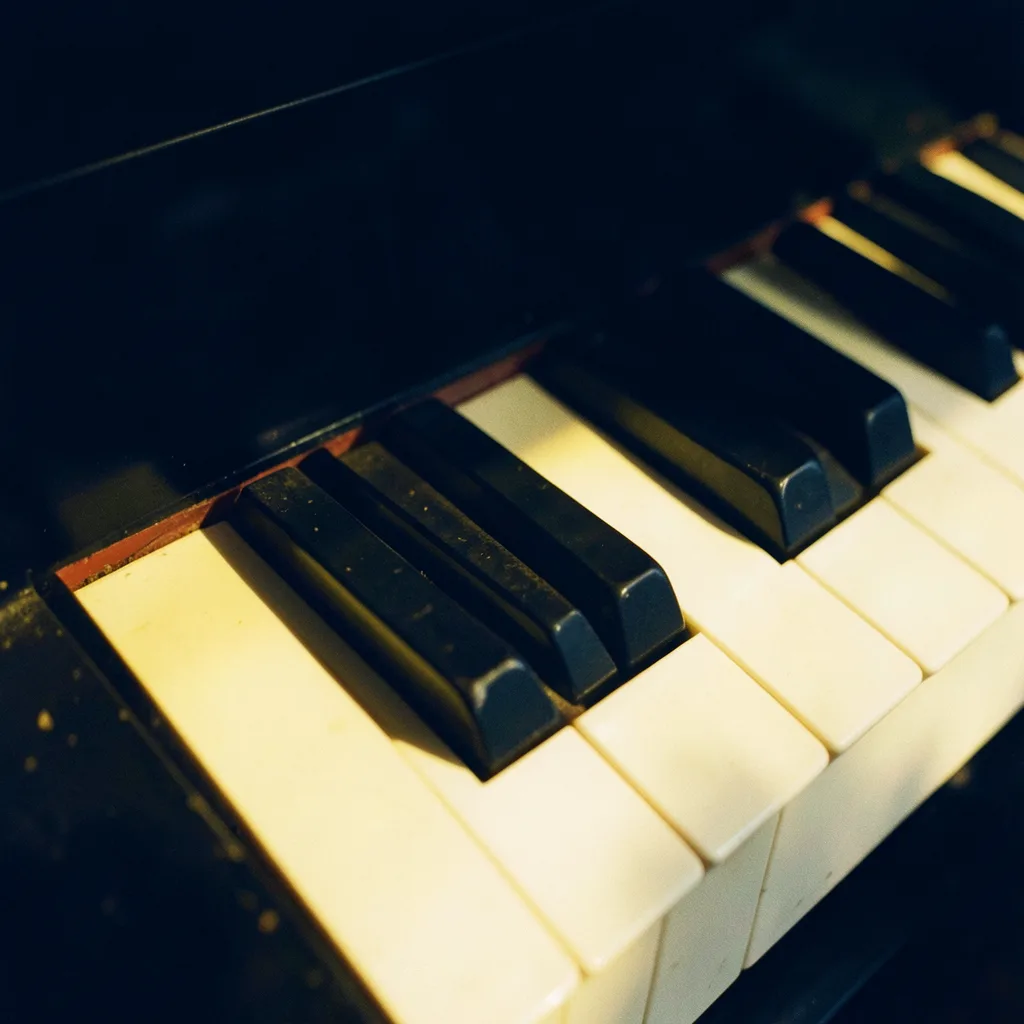




Memorize piano letter notes and play songs with greater confidence
Letter notation gives beginners a practical way to start playing without first learning every symbol on a traditional staff. A sequence such as C–E–G–E can be read, repeated, and connected to familiar sounds almost immediately. With regular practice, those letters stop feeling like separate instructions and become recognizable musical patterns.
The key is to memorize small groups of notes rather than trying to store an entire song at once. Your hands, ears, and visual memory can work together when practice is organized around short phrases, repeated shapes, and steady rhythm.
Piano Letters makes this approach especially accessible because learners can search for a familiar song, open a simplified arrangement, and begin experimenting on a piano or keyboard. The same method works for melodies in many styles, from beginner-friendly hymns to popular tunes.
Break songs into short musical phrases
A full page of letter notes can look intimidating, but most melodies are built from manageable phrases. Start by separating the song into sections of three to seven notes. A phrase may end where the melody pauses, where a lyric line finishes, or where the pattern begins again.
Read the first group slowly and play it several times. Then look away from the screen and try to reproduce it. If you miss one note, check the arrangement, correct the mistake, and repeat the group. Avoid restarting the entire song each time, since that gives the opening notes far more practice than the middle or ending.
Once the first phrase feels familiar, connect it to the next one. Play both groups together, pause, and test your memory again. Gradually increasing the length of each recalled section builds useful musical memory without creating unnecessary frustration.
Turn letter sequences into patterns
Memorizing isolated letters is harder than recognizing relationships between them. Notice whether the melody moves upward, downward, or returns to a note. For example, C–D–E–D can be remembered as “three ascending notes, then one step back” rather than four unrelated symbols.
Look for repeated shapes throughout the arrangement. A phrase may begin with the same three notes as an earlier section but finish differently. Other common patterns include alternating neighboring notes, repeated notes, small skips, and arpeggio shapes such as C–E–G.
Saying the pattern aloud can strengthen recall. Use simple descriptions like “up two, down one” or “repeat, then step higher.” This verbal shortcut reduces the amount of information your brain must hold while your fingers move.
When playing Amazing Grace with simple letters, for example, listen for repeated melodic ideas and the places where the tune expands or settles. Hearing those landmarks makes the note sequence easier to retrieve than visual memorization alone.
Combine sight, sound, and movement
Effective memorization uses more than one sense. First, look at the letters and identify the phrase. Next, play it while saying the notes quietly or tapping the beat. Finally, try it without looking. Each stage creates a different memory pathway.
Your fingers also need to learn the distance between notes. If C is followed by E, notice the physical movement rather than concentrating only on the names. On a keyboard, the hand begins to recognize familiar jumps and positions after repeated, relaxed practice.
Use a slow tempo at first. Speed can hide uncertainty, while a controlled pace exposes which transitions need attention. A metronome is useful, but it should support accuracy rather than force you to play faster than your memory allows.
| Practice focus | What to do | Useful sign of progress |
|---|---|---|
| Note recognition | Read one short phrase aloud | You identify letters without hesitation |
| Finger movement | Play the phrase slowly several times | Your hand finds the next key smoothly |
| Memory recall | Cover the notes and continue | You can complete the phrase with few pauses |
| Musical connection | Join two or more phrases | The melody sounds continuous |
| Speed building | Increase tempo gradually | Accuracy remains stable at a faster pace |
Use spaced repetition instead of long cramming sessions
Memory becomes stronger when a phrase is revisited after short breaks. Practice a new section for a few minutes, move to another section, and return to the first one later. This spacing forces your brain to retrieve the notes instead of relying on immediate visual familiarity.
A useful routine is to review a phrase after five minutes, again after an hour, and once more the following day. Each successful recall makes the sequence more durable. If the phrase disappears completely, reduce it to a smaller group rather than treating the lapse as failure.
Keep a short list of sections that still cause hesitation. Spend most of your time on those passages, while playing the familiar sections once or twice to maintain continuity. This approach is more efficient than repeatedly starting from the beginning.
End each practice session with one successful performance of the song or a larger section. Finishing with controlled playing gives you a clear reference for the next session and reinforces the feeling that the piece is becoming familiar.
Add rhythm before increasing speed
Correct letters can still sound disconnected if the timing is uncertain. Tap a steady beat while reading the sequence, even when the arrangement does not show detailed rhythm symbols. You can also speak the note names in time before playing them.
Start with evenly spaced notes, then listen for the natural shape of the melody. Some notes need to feel longer, while others move quickly toward the next tone. A recording or familiar memory of the song can help you imitate this phrasing.
Avoid practicing at maximum speed too soon. Fast repetition of an uncertain sequence often memorizes the mistakes as well as the notes. A slower performance with consistent timing creates a stronger foundation for later tempo changes.
Protect your attention during short practice blocks. Checking unrelated pages, including content about casino side bets, can interrupt the mental loop needed for recall. Keep the song, keyboard, and notes as the main focus until the practice interval ends.
Recover quickly when memory slips
Forgetting a note in the middle of a song is normal. Instead of stopping immediately, try to continue to the next familiar landmark. You may remember the phrase from its rhythm, hand position, or sound even when one letter briefly escapes you.
If you must stop, identify the exact transition that caused the problem. Was it a large interval, a repeated note, an unexpected change, or a phrase with too many letters? Isolate that moment and practice the two or three notes around it in both directions.
You can also create a mental anchor for every section. An anchor might be the first note, a lyric fragment, a distinctive rhythm, or a hand position. These cues help you restart confidently and prevent a single forgotten letter from disrupting the whole performance.
As your collection of memorized songs grows, keep arrangements organized and easy to revisit. The site’s impressum page provides useful information about the Piano Letters resource, while your own practice notes can record the sections, tempos, and patterns that matter most to you.
Build a routine that makes recall automatic
A short daily routine is usually more effective than one demanding weekly session. Choose one new phrase, review an older song, and finish with a relaxed play-through. Ten to fifteen focused minutes can produce steady progress when the work includes active recall.
Use these habits to make letter-note practice more efficient:
- Memorize phrases of a few notes before attempting full sections.
- Describe melodic direction and repeated shapes in simple words.
- Practice without looking at the notes at regular intervals.
- Review difficult transitions separately from easy passages.
- Increase speed only after the sequence remains accurate and relaxed.
Track progress by noticing how quickly you can begin a phrase, how few pauses you need, and whether your hands remain comfortable. The goal is dependable recall, not merely playing one perfect attempt.
Return to saved song arrangements every few days and test yourself before reading the letters again. With repeated retrieval, familiar sequences become automatic, allowing you to focus less on decoding notes and more on expression, rhythm, and the enjoyment of playing. Start with one song on Piano Letters today, divide its melody into small patterns, and let each accurate repetition build faster, more confident playing.