


Master the Jaws theme using only two piano letters
Few pieces of music are as instantly recognisable as the two-note motif that opens John Williams' score for the 1975 Steven Spielberg film Jaws. That low, pulsing rhythm has signalled danger in swimming pools, on footy ovals, and across Bondi Beach for decades. It is also one of the simplest riffs in cinema history to translate to the keyboard.
Using letter-note arrangements rather than traditional sheet music, beginners can replicate the suspenseful crawl of the shark with nothing more than two adjacent keys. This guide walks through the notes, the rhythm, and a few tricks to make the performance feel genuinely menacing, whether you are practising at home in Melbourne or jamming with mates before a screening at a Sydney outdoor cinema.
The story behind the Jaws theme
The famous motif was reportedly inspired by the sound of a cello bowing across two strings at once, creating that grinding, dissonant texture. Spielberg originally wanted something simpler, but the cellos won him over during a recording session at Fox Studios. What emerged was a pattern built almost entirely on the alternation of just two pitches, repeated in an unsettling rhythm that mimics a slowing heartbeat.
The score went on to win an Academy Award and became a cultural shorthand for approaching menace. Australians have embraced the riff with characteristic humour, using it in everything from surf carnival skits to cricket commentary. Its enduring appeal lies in how little musical material is needed to create maximum tension, a principle that any beginner can exploit at the keyboard.
Why two notes work so well
The magic behind the Jaws theme is the minor second interval, the smallest possible distance between two keys. When you move between adjacent notes like E and F, the ear cannot settle, creating a feeling of unresolved anxiety. Composers have used this device for centuries, but Williams found a way to make it feel modern and cinematic.
Repeating these two letters in a steady pulse reinforces that anxious quality. The brain is trained to expect variation in music, so the relentless sameness of just two notes becomes deeply unsettling. It is also wonderfully forgiving for new players because the fingering is identical each time, freeing you to focus on timing and dynamics.
Finding the right notes on your keyboard
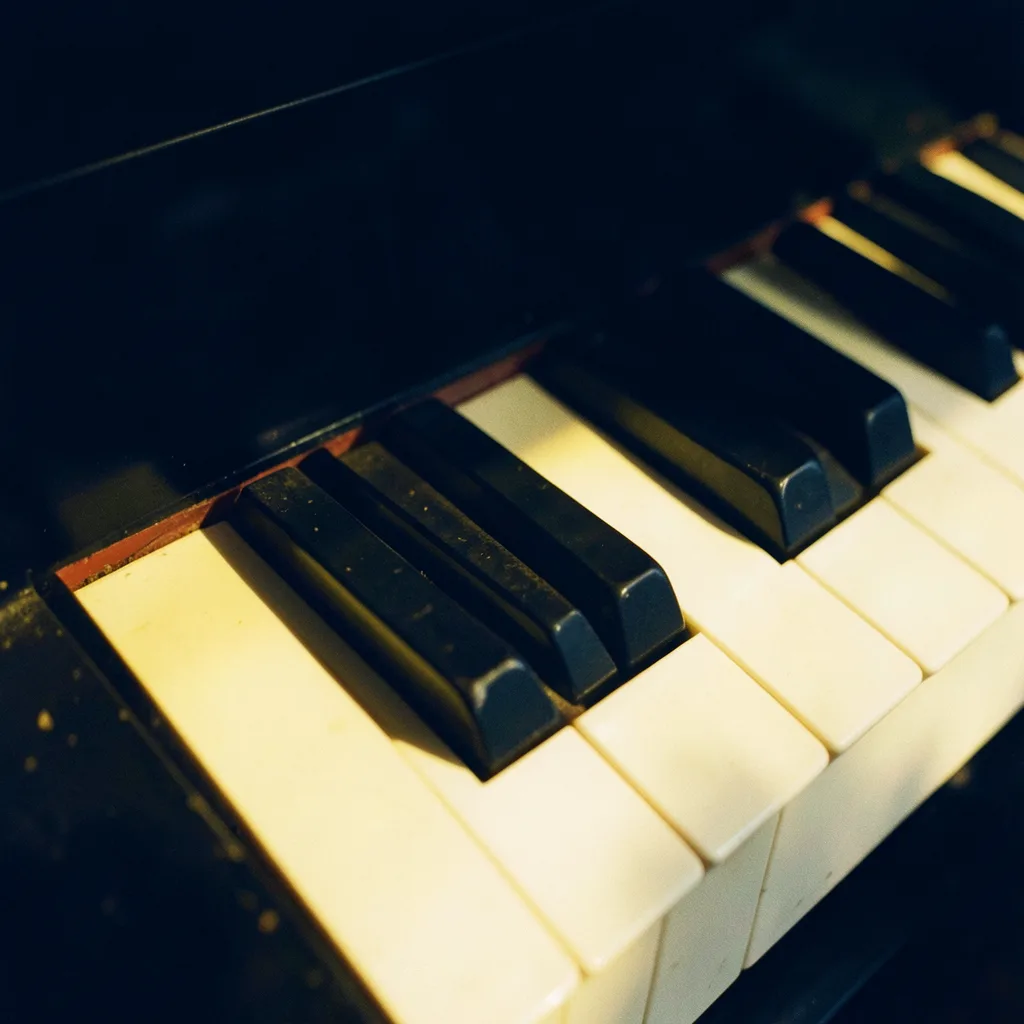
The classic Jaws arrangement uses the notes E and F, played an octave or two below middle C for maximum gloom. If you have a 61-key or 76-key beginner keyboard from JB Hi-Fi or a music shop in Brisbane, these notes sit just to the left of the group of two black notes in the middle of the instrument.
On a full 88-key piano, aim for the E two octaves below middle C, paired with the F just above it. The lower you play, the more rumbling and dramatic the effect. Letter-note charts for this piece typically show the E as a single letter and the F right after it, with arrows or rhythmic markings showing the long-short pattern. Once you locate these two keys by sight, the rest of the exercise is purely about feel and timing.
Getting the rhythm right
The rhythm is what sells the joke. It follows a long-short pattern that sounds like "duuun… duuun… duun-duun-duun." The first two notes are held longer, then three quick repeats bring the phrase to a close. In letter notation, this often shows up as a longer marking over the first pair and shorter marks over the second triplet.
A metronome set around 60 to 72 beats per minute helps lock in the pulse. Count it as "one-and, two-and, three-four-five" before adding the notes. Once you have the timing, try adding slight accents to the first note of each pair to mimic the original cellos. That little push gives the theme its cinematic weight, even when played on a starter keyboard bought on sale at Big W.
| Variation | Notes | Octave position | Effect |
|---|---|---|---|
| Classic shark | E and F | Two octaves below middle C | Deep, rumbling menace |
| Compact keyboard | E and F | Just below middle C | Clear, portable sound |
| Comedic parody | E and F | Two octaves above middle C | Bright, silly tone |
| Alternate tension | D and E♭ | Any octave | Bittersweet dread |
Practice tips that actually help
Start by tapping the rhythm on a table before you touch the keyboard. This trains your hand to internalise the timing without worrying about hitting the right key. Once the rhythm feels natural, add the notes one finger at a time, keeping the wrist loose and the attack firm.
Play along with the film's soundtrack or a YouTube clip to test your accuracy. Drop the volume on the recording and try to stay perfectly in sync with the orchestra. Many local music schools in Adelaide and Perth now use letter-note methods like these to engage younger students, so do not feel you are cheating by skipping traditional reading.
If you are interested in similar arrangements, these video game letter notes offer a library of simplified scores that follow the same principle, covering everything from Tetris to Mario.
Common mistakes beginners make
The most common slip is rushing the long notes. The first two "duuuns" need to breathe, so resist the urge to speed up. Equally important is leaving a tiny gap between each phrase. Without that silence, the theme loses its dramatic pause and starts to sound like a nursery rhyme.
Another pitfall is starting on the wrong note. Beginners often begin on F because it sits closer to middle C, but the theme traditionally starts on the lower E. Reversing the order flattens the menace. Finally, avoid the temptation to play the phrase over and over without expression. The notes may be simple, but the character comes from how you shape them.
Taking it further once you have it down
Once the basic two-letter pattern feels comfortable, try shifting the entire motif up an octave for a brighter, more playful version. This works well when you want to parody the theme rather than genuinely scare someone. Many learners find extra motivation through the site's bonus-forfeiture-condition rewards, which give you small wins to build upon as you master each phrase.
For a fun challenge, learn to play the theme in different keys. Moving to G and A gives a similar effect on a keyboard that lacks lower notes. You can also try combining the Jaws riff with the Tetris theme or the Super Mario Bros underground tune for a video-game medley. These mash-ups are popular at Australian LAN parties and community music nights, and they all rely on the same simple letter-note building blocks.
Grab a keyboard, find your E and F, and give the shark something to chase. With a little patience, you will be rattling windows from Parramatta to Perth in no time. Head over to Piano Letters to search for the full arrangement and start playing today.