



Play Piano Letter Notes Without Looking At Your Hands
Letter notation gives beginners a practical way to start playing songs on piano or keyboard. Instead of decoding a staff, you can follow notes such as C, D, E and F, then gradually learn where each key sits through touch, sound and repetition.
The next useful step is to reduce your dependence on the keyboard. When your eyes stay on the notes, rhythm, or music screen, your fingers begin to recognise familiar distances automatically. This makes playing smoother and helps you recover quickly after a missed key. The Piano Letters resource offers searchable arrangements that are well suited to this gradual approach.
Start With A Balanced Setup
Sit high enough that your forearms are roughly level with the keys, and keep both feet comfortably supported. Your shoulders should remain loose, while your wrists stay flexible rather than dropping heavily towards the keyboard. Good posture gives your fingers more freedom to move by feel.
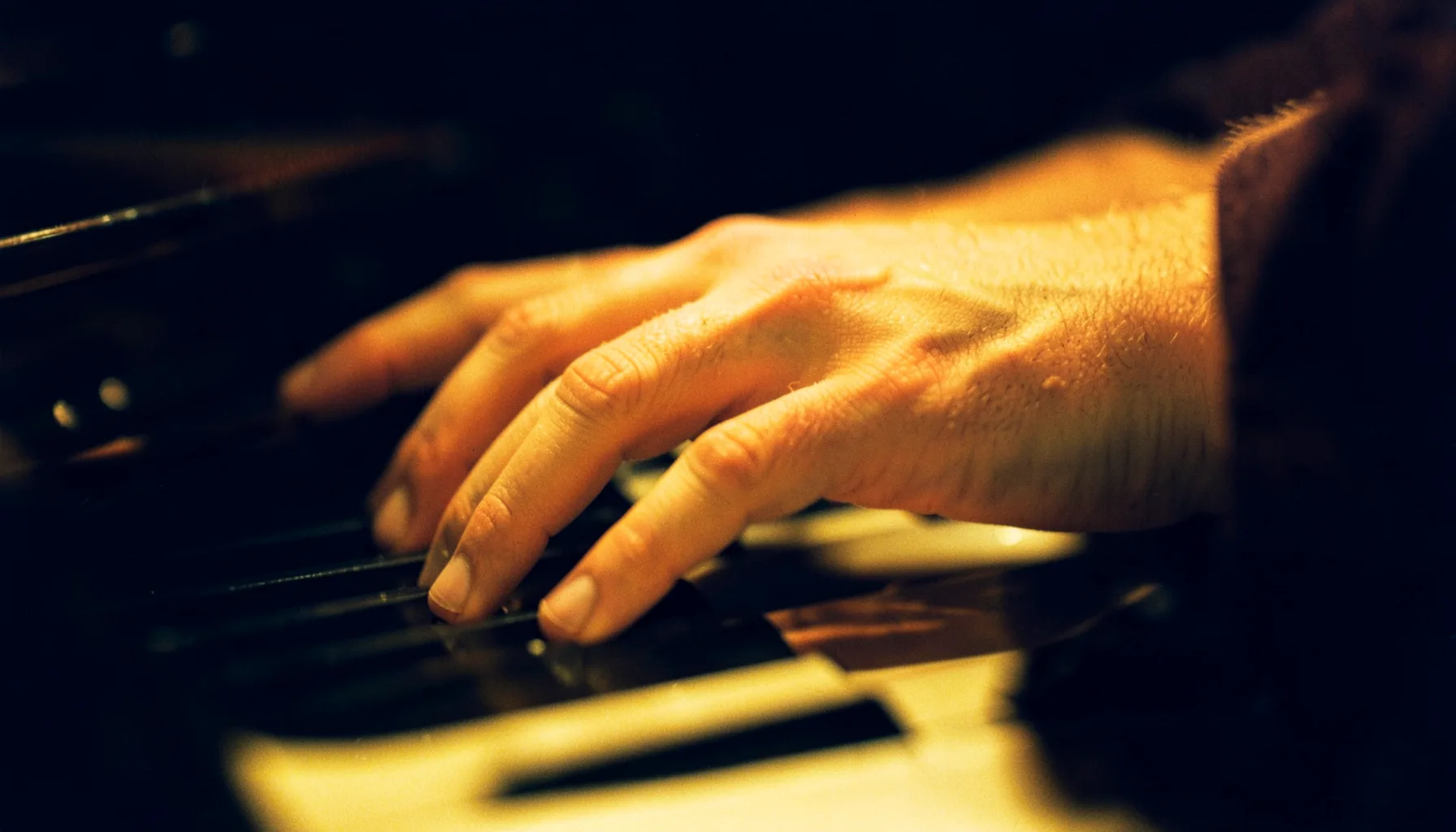
Choose one central position before you begin. Many simple arrangements use the area around middle C, so place your right thumb near C and allow the other fingers to rest on nearby white keys. Say the starting letters quietly, then play them several times while looking at the notes rather than directly at your hands.
Map The Keyboard By Touch
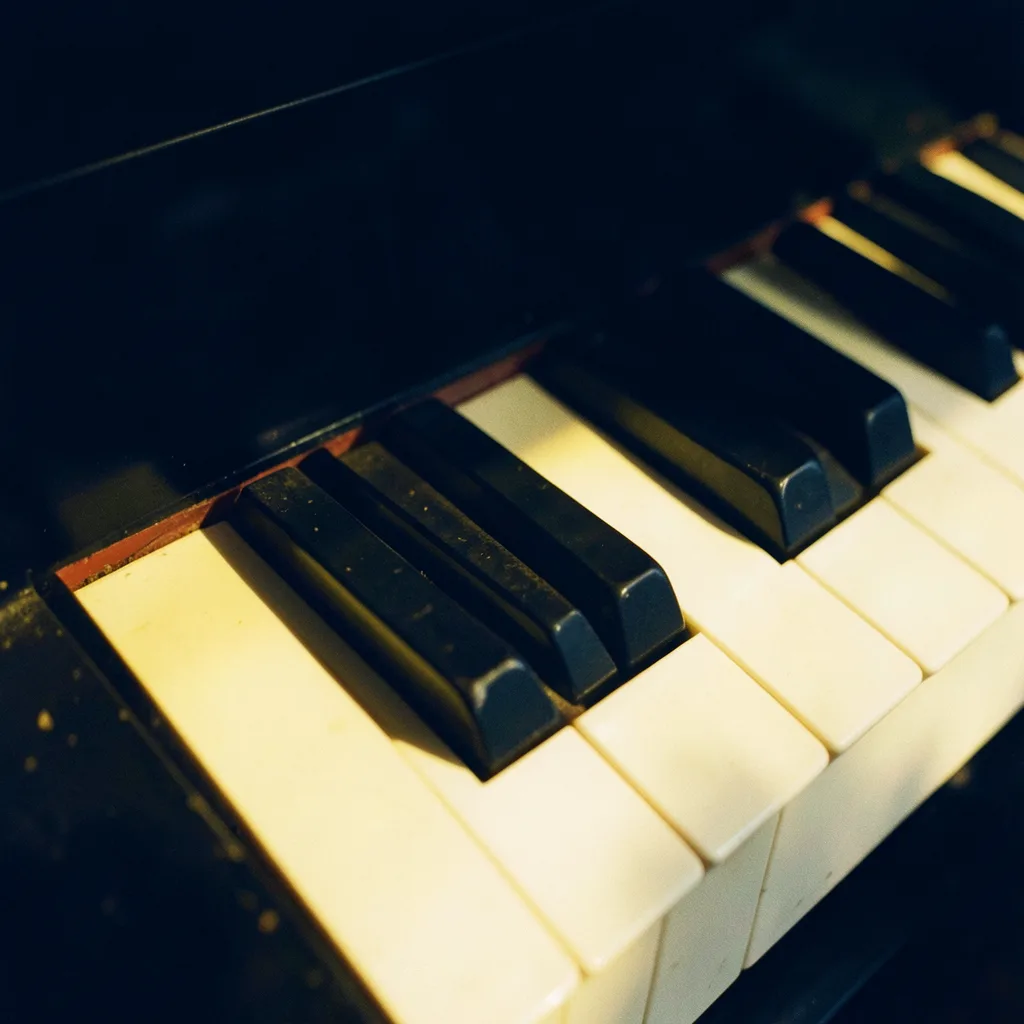
The raised black keys are useful landmarks. Groups of two and three create a repeating pattern, allowing you to locate nearby white notes without scanning the whole keyboard. For example, C sits immediately to the left of a group of two black keys, while F is just to the left of a group of three.
Practise finding these reference points with your eyes closed for only a moment. Touch a group of two black keys, identify the C below it, and then return to your starting position. This is a safer and more effective exercise than forcing yourself to play an entire song with your eyes shut.
Practise In Short Visual Bursts
Rather than removing visual support immediately, use a gradual fade. Look at the letter sequence, play two or three notes, glance away, and then check your hand position. If the notes are correct, extend the unseen section by one or two beats.
Short patterns are easier to memorise than complete lines. Play C-D-E-D several times, then try the same movement without looking. Next, change the starting note or move the pattern up one step. These small variations teach your fingers to recognise intervals instead of memorising one fixed shape.
Follow Rhythm And Phrasing
Letter notes are easier to play from memory when rhythm has a clear place in your practice. Count “one, two, three, four” aloud, tap the beat on your leg, or use a slow metronome. Your hands can then focus on finding the next key while your mind maintains the musical pulse.
Avoid stopping after every incorrect note. Keep the beat moving, even if you need to leave out a note temporarily. This develops recovery skills and reduces the habit of looking down whenever something goes wrong. Once the phrase ends, pause and repair the difficult movement slowly.
Use Familiar Songs As Training
Choose arrangements with a comfortable range and repeated melodic shapes. A song you already know helps you predict the next phrase through sound, which makes it easier to keep your eyes away from your hands. Begin with the melody alone before adding chords or a second hand.
For a recognisable theatre melody, the Any Dream Will Do notes can provide a useful practice piece. Mark short phrases, circle repeated letters, and memorise one line at a time. Your knowledge of the tune becomes an extra guide when your fingers are working by touch.
Move slowly enough to stay relaxed. If a section contains large jumps, briefly look at the destination key before the movement, then return your attention to the letters or rhythm. This is more musical than keeping your gaze fixed on your fingers throughout the whole song.
Build A Quiet Australian Practice Routine
Many learners in Sydney, Melbourne, Brisbane and other Australian cities practise around school, university or work commitments. A ten-minute session before dinner or after the morning coffee can be more productive than one long session each weekend. If you live in an apartment, use headphones with a digital keyboard or practise gently during reasonable daytime hours.
The Australian second-hand market makes entry-level keyboards accessible through local listings and community groups, but check that the keys respond evenly and that a compatible power supply is included. If you share a home, a keyboard with volume control gives you more flexibility than an acoustic piano. Also remember that Australian copyright law, including the Copyright Act 1968, generally restricts unauthorised copying or distribution of protected arrangements, so use online notes according to the site’s terms and permission requirements.
Useful checks for each short session:
- Keep your shoulders and wrists relaxed.
- Identify the next landmark before moving.
- Count steadily through mistakes.
- Repeat the hardest two-beat pattern.
Simple ways to reduce looking:
- Cover only part of your hands with a light cloth.
- Place the music screen slightly above the keyboard.
- Practise one phrase with peripheral vision.
- Use a slow recording to review progress.
Compare Methods And Track Progress
Different approaches suit different stages of learning. Looking at your hands is useful when learning a new position, while tactile practice is more valuable once the basic movement is familiar. The aim is not to ban visual checking; it is to make each glance purposeful.
| Practice approach | Best use | Main benefit | Common risk |
|---|---|---|---|
| Watch every finger | Learning a new starting position | Immediate visual accuracy | Dependence on the keyboard |
| Glance before a jump | Moving to a distant note | Safer navigation | Losing the beat if the glance is too long |
| Look at letters and rhythm | Playing a familiar phrase | Stronger memory and continuity | Repeating errors without checking |
| Play by touch briefly | Testing a memorised pattern | Better finger awareness | Tension or wrong starting notes |
Keep a simple record of what you can do without looking. You might write “four notes”, “one phrase” or “eight bars at a slow tempo” after each session. Progress is easier to notice when you measure control, steadiness and recovery rather than speed alone.
A useful next piece can be a repeating, energetic melody such as Carol of the Bells. Start with a slow fragment, identify its recurring pattern, and only increase the tempo once your hands can find the notes with fewer visual checks.
Set aside a few minutes today for one familiar phrase. Read the letters, locate the first key, look away for two or three notes, and return to the page before tension builds. With regular practice, playing letter notes without looking at your hands becomes a natural part of playing rather than a separate challenge.